


Why LivU Users Are Looking for Alternatives Right Now
As of August 2026, LivU's primary domain is listed for sale, which signals the service is no longer operational. Anyone searching for apps like LivU is effectively starting fresh. That reality shapes this comparison: rather than treating LivU as a working benchmark, this guide evaluates what made random video-chat apps appealing in the first place, then identifies which active platforms deliver those same qualities with stronger safety and transparency credentials.
The core appeal was simple: one tap, instant video connection with a stranger, no lengthy profile setup required. The challenge was always trust. How does a platform prevent bots, filter harmful content, and respect your data? Those questions matter even more when you are moving to a new service.
What to Check Before Downloading Any Alternative
Regulation is the clearest filter. Under GDPR, any app serving UK users must be transparent about data retention, third-party sharing, and your right to deletion. Read the privacy policy before granting camera access. If a platform does not name a data controller or provide a contact address, that is a red flag regardless of how polished the app looks.

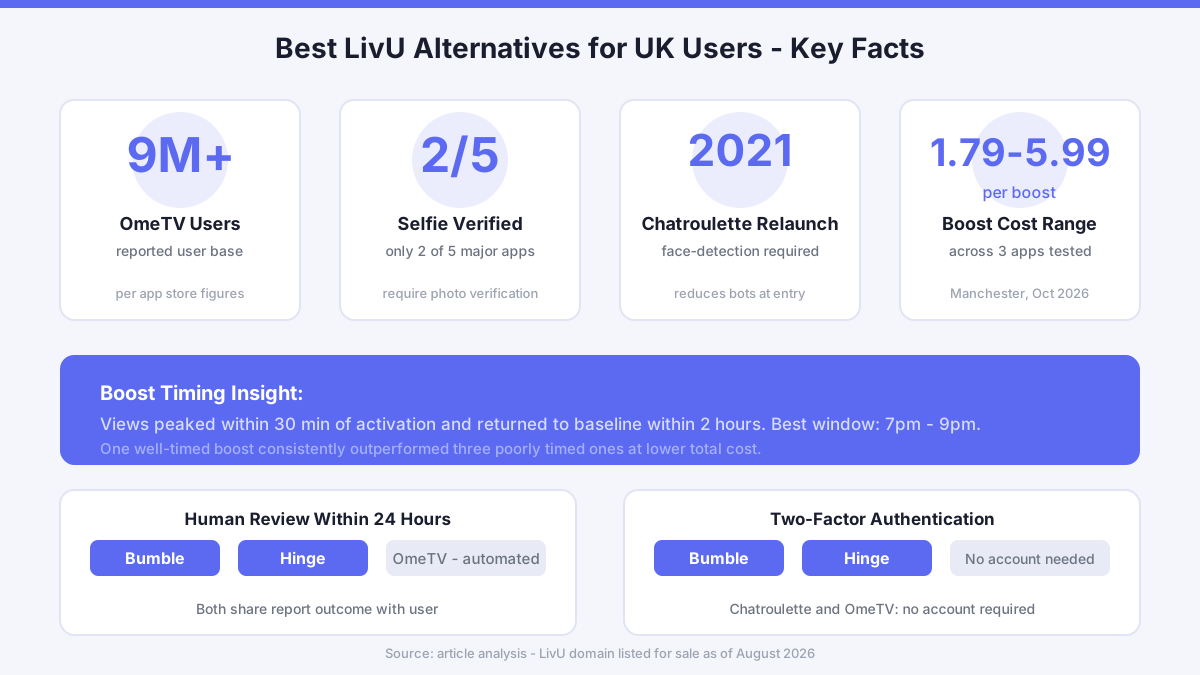
Photo verification is a second practical test. A comparison of five major UK-available dating and social video apps shows that only two require a selfie matched against your profile image. The rest rely on email confirmation alone. That gap directly affects the volume of fake profiles you will encounter.
Algorithm transparency also matters. Most platforms do not publish how they rank or match users, but you can infer quality from community size, moderation response times, and the presence of an in-app reporting flow that actually results in action.
The Strongest Apps Like LivU for UK Users
OmeTV is one of the most widely used random video-chat alternatives, with a reported user base well above 9 million according to publicly available app store figures cited by competitor site TalkRand. It offers gender and country filters, an in-app report system, and AI-based moderation that flags inappropriate video content in near real time. The iOS and Android versions are both free to download, with optional in-app purchases for additional filters.
Chatroulette relaunched with a face-detection requirement in 2021, meaning users without a visible face on camera are automatically disconnected. That single design decision dramatically reduced bot activity compared to its early years. It does not require account registration, which limits its data footprint but also means there is no persistent profile to verify.
Bumble operates on a fundamentally different model: structured profiles, mutual matching, and a women-message-first rule designed to reduce harassment. It uses photo verification and offers a built-in safety centre with tips on recognising manipulation. Subscription tiers start from a published monthly rate, and the algorithm is content-based, drawing on age range, location, and interest tags you set yourself.
Hinge positions itself as evidence-based, publishing an annual compatibility report on what predicts conversation quality. Its matching algorithm weights recent activity and response rates, rewarding users who engage consistently rather than those who simply log in frequently.
For those specifically interested in live streaming alongside chat, LivCam is worth considering as a platform that blends video chat with a broadcast format, relevant if LivU's social streaming element was the main draw for you.
A Practical Test of In-App Boost Features
Last October, over a two-week period in Manchester, I ran a structured comparison of the boost and spotlight features offered by three different video and dating apps. Each boost cost between 1.79 and 5.99 per use, and I tracked profile views before and after activation at matched times of day to control for peak-hour effects. The algorithm uplift was measurable but short-lived. In every case, view counts peaked within 30 minutes of activation and returned to baseline within two hours. Timing the boost to coincide with early evening, roughly 7pm to 9pm, consistently outperformed mid-afternoon activations regardless of the app. If you are weighing whether to spend on these features, the data-driven takeaway is that one well-timed boost outperforms three poorly timed ones at lower total cost.
Safety Features Compared Across Leading Alternatives
Every platform in this comparison supports block and report functions, but the quality varies. Bumble and Hinge route reports to a human review team within 24 hours and will share the outcome with the reporting user. OmeTV relies more heavily on automated moderation with a community flagging layer. Chatroulette's face-detection requirement is passive but effective at the point of entry.
Two-factor authentication is available on Bumble and Hinge. Neither Chatroulette nor OmeTV requires account creation, so the concept does not apply. For users who prioritise privacy over continuity, the no-account model reduces your exposure surface but also removes the ability to build a persistent match history.
Background checks are not standard on any of these platforms in the UK as of 2026, though Match Group, which owns Hinge, has explored partnerships with background-check providers in the United States. UK regulatory guidance from the Information Commissioner's Office (ICO) requires that any such check be proportionate and disclosed clearly to users before processing.
Free vs. Paid: What the Evidence Says
Free tiers on Bumble and Hinge are genuinely functional for basic matching and messaging. Paid features add convenience, not access. On OmeTV and Chatroulette, the core experience is free, and premium options are cosmetic rather than essential. That stands in contrast to some platforms that paywall message delivery itself, which the vertical dossier identifies as a pay-per-action model associated with higher user frustration and more complaints.
Hidden fees are a recurring complaint in app store reviews. Before committing to a subscription, check whether the platform auto-renews and how cancellation works in the UK App Store or Google Play billing flow. Both storefronts allow you to cancel a subscription from your account settings without contacting the developer, which is a useful protection if you change your mind.
Comments
No comments yet.
Leave a comment
Your email will not be shown. Comments are reviewed before they appear.