


Why Fake Profiles Exist on Dating Platforms
Dating apps attract fake accounts for a simple reason: where real people go looking for connection, bad actors follow. Bots are often automated accounts designed to push you toward an external link or collect personal data. Scammers behind fake profiles are usually after money, gift cards, or sensitive information. Neither type is unique to any single app, and platforms across the industry, from large household names to newer video-based apps, all face the same challenge.

According to the US Federal Trade Commission, romance scams cost Americans over 1.3 billion dollars in 2022 alone, making it one of the most financially damaging categories of online fraud. The UK picture is similar. Action Fraud reported thousands of romance fraud cases in recent years, with average losses running into thousands of pounds per victim. These are not edge cases. They are a real part of the online dating landscape, and being informed is your first line of defence.
Understanding how fake profiles operate on LivU specifically, rather than dating apps in general, helps you stay safer. Fake accounts on video-matching platforms tend to behave differently from those on swipe-based apps, and knowing those differences matters.
Red Flags That Point to a Fake LivU Profile
The most reliable way to protect yourself is to know what authenticity actually looks like, and then notice when it is missing. Some signs are obvious once you know them. Others are subtler.
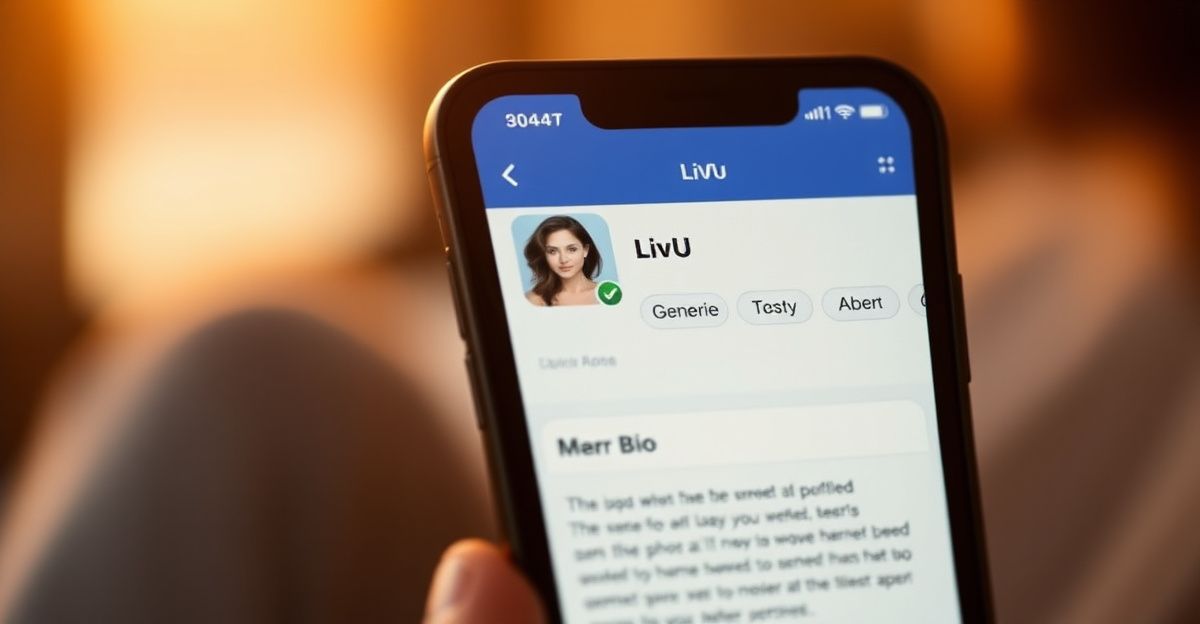
Photos that look professionally lit, perfectly posed, or oddly similar to stock images are a strong signal. Real people take candid shots. If every image looks like it belongs in a catalogue, consider doing a reverse image search using Google Images or TinEye. If those photos appear elsewhere under a different name, you have your answer.
Behaviour patterns matter just as much as photos. A profile that responds instantly at any hour, sends generic compliments that could apply to anyone, and steers the conversation toward a link or another platform very quickly is almost certainly a bot. A real person has a life. They reply when they can, ask specific questions, and remember what you said earlier in the chat.
Watch out for escalation pressure. A fake profile often pushes hard and fast, either toward emotional intimacy designed to lower your guard, or toward practical requests like sending a small amount of money to help with an emergency. Legitimate users do not ask for financial help from someone they met hours ago. If that request appears, end the conversation.
On LivU, users have noted that bot activity tends to feel higher on newer or low-activity accounts. If you have only just signed up, filling out your profile fully and being active in genuine interactions can shift the quality of who you are matched with. The platform's matching behaviour responds to engagement signals, so a complete, active profile helps surface more real people.
How to Protect Your Connection and Your Personal Data
There is a practical difference between being cautious and being closed off. You want to stay safe without shutting down the openness that makes real connection possible. These two goals are not in conflict.
Keep personal details out of early conversations. Your home address, workplace, financial information, and even your full surname are things to share only once you have built genuine trust over time, ideally after meeting in person. Use LivU's built-in chat rather than moving immediately to WhatsApp or Telegram, because once you are off the platform, you lose access to in-app reporting tools if something goes wrong.
Enable any verification features the platform offers. Profile verification is a meaningful trust signal. If you want to understand how LivU handles identity checks and what its verification process involves, the LivU verification guide covers the specifics in detail. Verified profiles are not a guarantee of good intentions, but they do reduce the likelihood of dealing with a bot.
One thing I find myself returning to in coaching conversations is the idea that vulnerability and caution can coexist. I remember sitting in a coffee shop in Manchester one Tuesday morning, journalling about why several recent connections had never gone anywhere. I realised I had been holding back, using humour as a shield rather than letting anyone see the real me. That afternoon I wrote down three honest things about myself I was willing to share. Nothing dramatic, just real. The very next conversation I tried it, and something shifted. The person I was talking to visibly relaxed and opened up too. Authentic self-disclosure creates genuine connection. But it should go toward people who have earned it, not toward a profile you have known for twenty minutes that is already asking you to click a link.
What to Do When You Encounter a Fake Profile
Reporting matters. Every report you submit helps the platform's moderation team identify patterns and take action. On LivU, you can report a profile directly from the chat window. Do not skip this step just because you have already blocked the account. The report is what triggers a review.
Block immediately after reporting. There is no benefit to staying in contact with an account you believe is fake, and there is real risk. Once blocked, that profile cannot contact you again.
If you believe you have been targeted by a scammer and financial information has been shared, contact your bank straight away and report the incident to Action Fraud at actionfraud.police.uk. They handle online fraud reports in the UK and can advise on next steps.
If you have wider concerns about how the platform handles safety or user complaints, the LivU complaints overview gives useful context on how issues are typically handled. Knowing your options helps you feel less powerless if something does go wrong.
Building Genuine Confidence While Staying Safe
The goal is not to become so suspicious that you never connect with anyone. That mindset will keep you safer from scammers, but it will also keep you away from real people who are looking for exactly the same thing you are. The practical tip here is to trust incrementally. Give small pieces of yourself, observe how the other person responds, and let trust build through consistent, honest conversation over time.
A useful mindset shift is to think of your early interactions as getting to know someone rather than screening them for fraud. When you approach a conversation with genuine curiosity about the other person, you naturally ask more specific questions, share more real things about yourself, and notice inconsistencies more clearly. A bot cannot hold up under genuine, specific, curious conversation. A real person thrives in it.
For a broader view of how the platform performs and whether it fits what you are looking for, the full LivU review covers user experience, features, and safety in more depth. And if you are weighing up whether the app is trustworthy overall, the is LivU safe assessment is worth reading before you invest more time in the platform.
Comments
No comments yet.
Leave a comment
Your email will not be shown. Comments are reviewed before they appear.